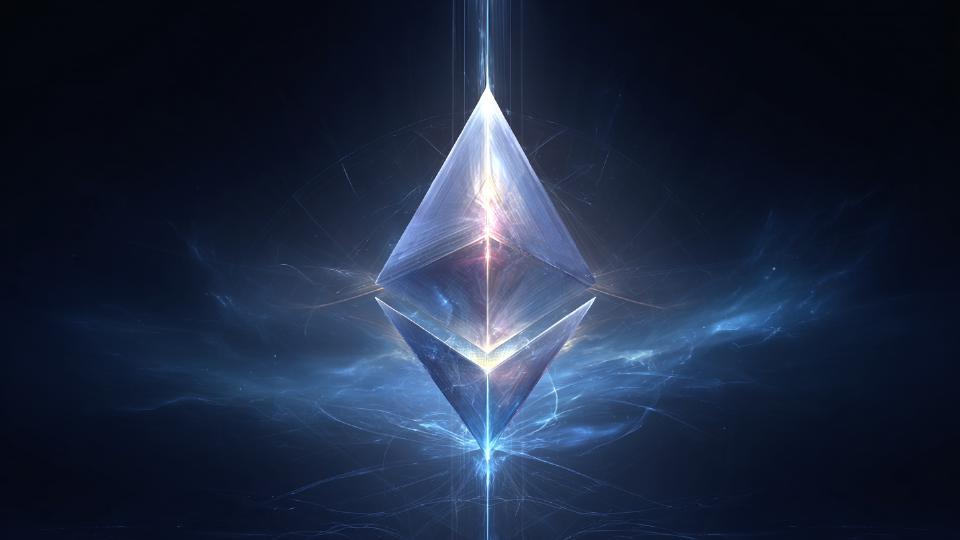
What Does the Octahedron Mean in Sacred Geometry?
In sacred geometry, the octahedron is most commonly associated with the element of Air. Its symbolism gathers around movement, balance, exchange, and lucidity. Because the form rises to a point above and falls to a corresponding point below, it also suggests an equilibrium between higher and lower currents.
At its most direct, the octahedron signifies Air and the qualities traditionally belonging to that element: breath, motion, thought, communication, and proportion held in motion rather than at rest. Upon this foundation, more developed esoteric readings treat the octahedron as a structure of transmission, refinement, and transformation.
The Classical Meaning: Why the Octahedron Represents Air
The octahedron is one of the five Platonic solids. In classical philosophy, each of these solids is assigned to an element, and the octahedron belongs to Air.
The correspondence rests on the nature of the form itself, not on decorative symbolism. The octahedron has a light, mobile, and directional geometry. It implies motion rather than rest, circulation rather than enclosure, and transmission rather than containment. These are precisely the qualities traditionally attributed to Air.
Where Earth stabilizes and Fire impels, Air moves between. It carries, distributes, and mediates. The octahedron therefore appears not as a mass that holds, but as a form through which movement becomes ordered.
Geometric Logic: Why the Shape Matters
The octahedron consists of eight triangular faces, formed by two pyramids joined base to base. This simple fact gives the figure much of its symbolic force.
Its structure establishes a clear vertical axis, with one point directed upward and another downward. The shape therefore lends itself naturally to the language of exchange between higher and lower levels. The two halves mirror one another, but the balance implied is not inert. It is the balance of a poised motion, a symmetry sustained across opposing directions.
Unlike the cube, the octahedron does not enclose space in a grounded and settled way. It appears to channel rather than to store. The rapid convergence of its faces toward their points also gives it an air of focus and precision, as though movement were being clarified into line and vector.
For that reason, the octahedron corresponds to Air not only by inherited convention, but by a structural logic that the eye can grasp at once.
The Octahedron as a Transitional Form
A fuller meaning emerges when the octahedron is considered among the Platonic solids as part of a sequence. The tetrahedron, associated with Fire, suggests pure directional force. The cube, associated with Earth, suggests stabilized and enduring form. Between them stands the octahedron.
In that position, the octahedron may be understood as a transitional form: the stage at which force has become transmissible, though not yet fixed into stable embodiment. It is neither ignition nor settlement, but the interval in which motion becomes articulate.
This relation accords closely with alchemical habits of thought. Separation releases force; circulation distributes and refines it; fixation gives it body and permanence. The octahedron belongs to the circulating phase, in which movement gathers itself into intelligible pattern.
Reversibility and Transformation
In classical philosophy, the elements are not wholly immobile principles. They pass into one another through structural change. The octahedron, therefore, need not be treated as a fixed emblem of Air alone, but as a transitional geometry participating in processes of transformation.
Such a form belongs to moments of recomposition: when structures break apart, when relations are altered, when one state gives way to another. In this respect, the octahedron signifies more than motion. It signifies transformability, the ordered passage from one condition into the next.
The Octahedron as Threshold and First Stable Passage
A deeper import appears when the octahedron is understood not only as the solid of Air, but as a threshold form. In symbolic terms, it marks the point at which released force first becomes ordered enough to pass, transmit, and hold relation without yet hardening into a fixed body.
This helps explain why the form can recur at moments of departure, initiation, or crossing. A doorway marked by an octahedral glyph would not signify enclosure or completion, but passage into a condition where movement has become structured. The emblem belongs naturally to thresholds because its proper office is mediation between states.
The same logic applies in alchemical reading. The earliest phase of the work is often described through separation, volatilization, and dissolution. Yet dissolution alone is not a form. The octahedron corresponds more closely to the first coherent state after that rupture: the point at which what has been released becomes transmissible rather than merely scattered.
For that reason, the octahedron may be understood as the first stable passage after separation. It is not the end of the work, nor even the final end of the first work, but the first intelligible equilibrium achieved once fixed unity has been broken apart. What had been dense becomes mobile; what had been undifferentiated becomes articulate.
This interpretation remains a symbolic synthesis rather than a named doctrine of the older texts. Yet it accords closely with the broader logic of alchemy, where separation must be followed by circulation and only then by fixation. The octahedron belongs to that middle state: not destruction, not embodiment, but lucid transition.
The Dual Nature of the Octahedron
Air does not signify clarity alone. It also bears the risk of dissipation. The symbolism of the octahedron therefore has a double edge.
In ordered operation, the form suggests clarity, articulation, precise transmission, and a balance maintained through active relation. In disordered operation, the same airy quality may become fragmentation, instability, scattered thought, or signal thinned into noise.
The distinction lies in coherence. What is properly aligned is refined; what is not aligned disperses.
The Octahedron as a Center Without Containment
Unlike the cube, the octahedron does not create a stable and enclosing interior. Its center is defined less by possession of volume than by the equilibrium of opposing directions.
For that reason, it may be understood as a center without containment. The form organizes movement without trapping it, and holds relation without reducing it to stillness. This gives the octahedron a distinctive symbolic character. It behaves less like a vessel than like a field of alignment.
Such a conception helps explain why the form is often experienced as balancing rather than enclosing, and why it proves especially apt for meditative or esoteric work concerned with relation, transmission, and vertical exchange.
Air, Mediation, and Mercury
A further interpretive layer appears when the octahedron is read through the Hermetic principle of mediation. In alchemical and philosophical traditions, the mediating power is frequently described under the name of Mercury: messenger, transformer, subtle carrier, and bridge between states.
Under that reading, Air supplies the structure of movement, while Mercury supplies the function of transmission. The octahedron then becomes an intelligible symbol for the passage by which thought becomes speech, impulse becomes signal, and intention assumes communicable form.
This remains an interpretive synthesis rather than a strict classical assignment. Yet it accords well with Hermetic logic, in which movement without mediation remains blind, and mediation without structure remains diffuse.
Voice, Breath, and Expression
From the correspondence with Air there follows, almost naturally, an association with voice. Voice is breath brought into pattern; expression is thought carried upon air and given audible contour.
In this practical register, the octahedron may serve as a model for articulation, refinement of speech, clarity of projection, and the alignment of intention with utterance. Such uses belong to an operative extension of the symbol rather than to its ancient doctrine, but the extension is coherent. A form associated with ordered movement and transmissive balance readily lends itself to the discipline of expression.
The Octahedron as a Structure of Transmission
Taken together, these layers suggest a more comprehensive understanding of the octahedron. It may be seen as a structure that organizes movement into transmissible form.
It stands between force and form, between inner and outer, between above and below, between impulse and expression. It does not generate force in the manner of Fire, nor does it stabilize force in the manner of Earth. Its office is different. It carries, refines, and distributes.
This is the point at which the symbol ceases to be merely classificatory and begins to show doctrinal depth. The octahedron is not simply the solid of Air. It is the geometry of ordered passage.
Working With the Octahedron in Practice
In contemplative work, the octahedron lends itself most readily to practices of alignment and transmission. One mode of exercise consists in imagining the body or the subtle field within an octahedral form, and allowing breath to move along its vertical axis, ascending and descending in measured correspondence. Such a practice emphasizes balance between higher and lower currents and makes the symbolism of the form immediately experiential.
A second use belongs to speech and utterance. A phrase, prayer, or formula may be spoken slowly while the octahedral form is held in mind, with attention given to tone, cadence, and precision. In such an exercise, the concern is not force of projection alone, but the purification of expression until sound and intention fall into accord.
The same form may also be used for mental clarification. Dispersed or competing thoughts are imagined as drawn toward the center of the octahedron and redistributed in a more ordered relation. In this sense, the form serves not as a container of thought, but as a principle of rearrangement.
In more explicitly esoteric work, the octahedron functions well wherever balance between polarities is required: ascent and descent, activity and receptivity, emission and reception. Its proper domain is not brute force but lucid mediation.
What the Octahedron Means, in One Sentence
If the cube symbolizes stable form, the octahedron symbolizes balanced movement and transmission within form.
Conclusion
The octahedron in sacred geometry represents Air: movement, balance, exchange, and clarity. Yet this classical attribution does not exhaust its significance. At a deeper level, the form becomes a model of transformation, mediation, transmission, and alignment between levels of being.
The octahedron is therefore more than a sign of motion. It is a structure through which motion becomes intelligible, precise, and communicable. That is why it continues to hold such force in both philosophical reflection and esoteric practice.
Frequently Asked Questions
What does the octahedron mean in sacred geometry?
The octahedron is traditionally associated with the element of Air. It represents movement, balance, exchange, and the transmission of thought, breath, and subtle forces.
Why is the octahedron linked to Air?
In classical philosophy, especially in Plato’s Timaeus, the octahedron corresponds to Air because its structure suggests mobility, lightness, and the ability to transmit rather than contain.
What is the deeper meaning of the octahedron?
Beyond its classical meaning, the octahedron can be understood as a structure of mediation and transformation, where force becomes transmissible pattern and movement is balanced between higher and lower directions.